Fourth Amendment Rights in the Digital Age
The U.S. Supreme Court has consistently recognized over the last sixty years that constitutional protections evolve with technological progress.
The Fourth Amendment of the Constitution of the United States (ratified 12/15/1791) The right of the people to be secure in their persons, houses, papers, and effects, against unreasonable searches and seizures, shall not be violated, and no Warrants shall issue, but upon probable cause, supported by Oath or affirmation, and particularly describing the place to be searched, and the persons or things to be seized.
Katz v. United States (1967) established that the Fourth Amendment “protects people, not places”, recognizing that a privacy interest can exist even in a public setting.
Kyllo v. United States (2001) held that when advanced surveillance tools reveal information that could not otherwise be obtained through ordinary observation, their use may constitute a Fourth Amendment search.
Carpenter v. United States (2018) marked a turning point in the Court’s analysis, recognizing that aggregated location data is fundamentally different from the isolated public observations that were possible before. The Court concluded that technology that reconstructs a person’s historical location over time reveals intimate details of a person’s life, bringing that information within the scope of the Fourth Amendment’s protections.
Chatrie v. United States (2026) builds on the above cases’ reasoning. Rather than tracking a known suspect, investigators used a geofence warrant to compel a third party service provider to search a database of location information to see who happened to be near the crime scene. The Court held that accessing this historical location data is itself a Fourth Amendment search, reinforcing the principle that comprehensive digital surveillance raises constitutional concerns even when the underlying data relates to public movement.
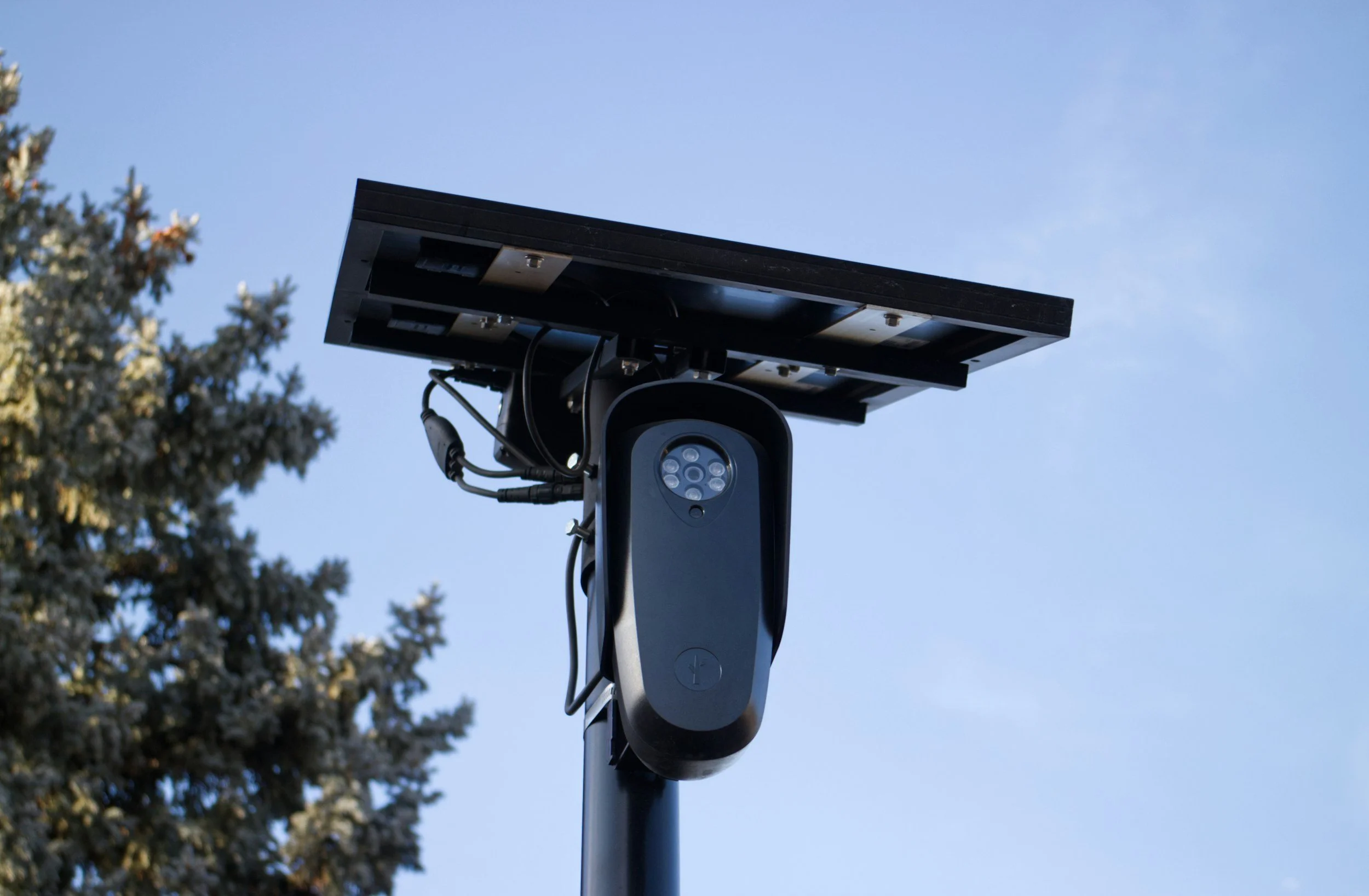
So what does this mean?
The common theme connecting the Court’s decisions is the understanding that data aggregation changes the game. Heck, it’s a whole new field.
The constitutional concern isn’t limited to whether each individual observation occurred in public, but whether the technology at use enables the government to assemble a detailed picture of someone’s private life.
Can we please get back to mass surveillance and the Flock cameras?
Sure! Let’s take a closer look at Chatrie and see how the key points from that case stack up against ALPR surveillance.
Chatrie
Google database
Reverse search (no known suspect)
Included everyone near the crime
Reconstructed historical movements
Swept in innocent people
ALPR surveillance
National ALPR database
Reverse plate/vehicle search
Includes everyone driving near the camera
Reconstructs historical driving movements
Sweeps in innocent drivers
Oh. The Fourth Amendment concerns look pretty similar, don’t they?
The Takeaway
The Fourth Amendment is no longer just about where the government looks. It’s about what technology allows the government to know.
As surveillance capabilities continue to evolve, the Court is clearly indicating that while individual movements are observable, the technology that allows those movements to be recorded, aggregated, and searched presents a completely different constitutional question.
Litigation on the legality of this mass surveillance technology is in its early stages. The City’s adoption of ALPR surveillance puts Carrollton at risk for expensive litigation that residents would bear the burden of funding.